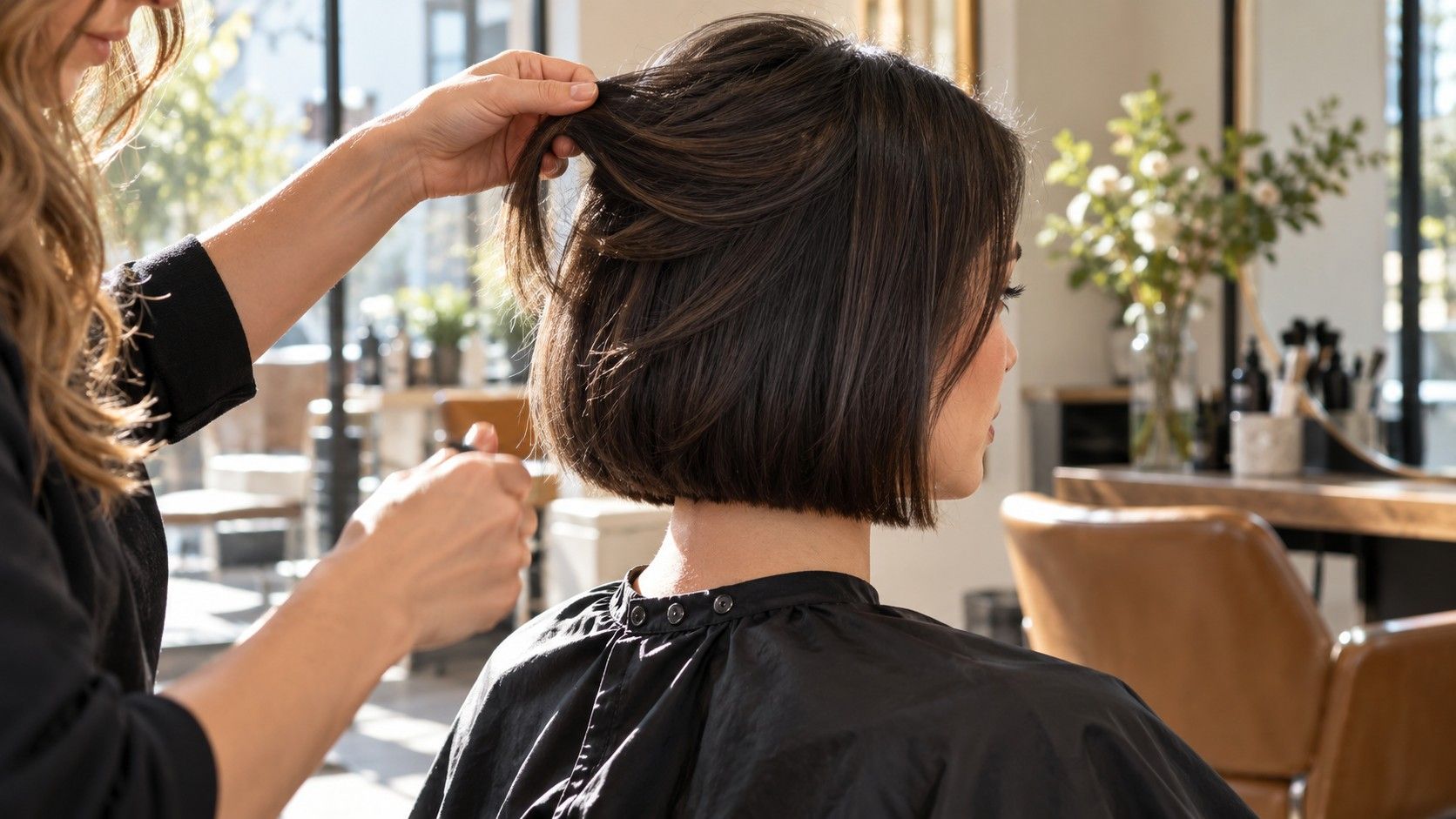
The fringe in a reference photo may sit in a smooth line while your front hair opens into a gap as soon as it dries. A cowlick does not automatically rule out bangs, but it changes the conversation about length, weight and maintenance. The most useful starting point is the way your own roots behave without being pulled into place. Work from that evidence before deciding how much hair to bring forward or how short to cut it.
Find the direction the front roots actually take
Look at the first few centimeters of hair along your forehead when it is dry and has not been brushed flat for a photo. A section may lift, turn sideways or separate from its neighbor. Notice where that change begins: near the center, above an eyebrow or at a temple. A gap caused by a strong sideward direction creates a different planning problem from a front section that simply bends at the ends.
Take a photograph from the front and one from slightly above. Then brush the front loosely forward, release it and watch where it settles. You are looking for a repeated direction, not trying to diagnose anything from a single strand. Hair shaped by sleep, a hat or a recent ponytail can give a misleading impression, so compare it on a normal wash day as well. Bring those ordinary photos to the appointment.
Check your parting at the same time. A part that starts behind the hairline may be easy to move at the lengths, while the front still opens in its familiar place. Moving the visible line with a comb does not guarantee that a fringe will stay closed. Ask the stylist to inspect the roots before washing or heavily styling them; that is the clearest moment to explain which section keeps lifting or separating.
Set a realistic limit for daily styling
Bangs can need attention even when the rest of the haircut air-dries comfortably. Think about whether you would dampen the front and reshape it after sleeping, or whether you need to leave immediately after a quick brush. Styling the root area is a different task from curling the ends under. If the front springs open at the root, polishing only the last centimeter may leave the gap untouched.
Ask for a demonstration with the tools you actually own. A stylist may show you how to dry the roots in more than one direction before guiding the fringe into its resting position. Watch the hand position and airflow rather than memorizing a product name. Use the dryer according to its instructions, keep it moving, and stop if the heat feels uncomfortable. More heat is not a substitute for choosing a manageable shape.
Also consider the mornings when you will do very little. A longer split fringe may be easy to tuck away, whereas short full bangs may remain visible even if they refuse to sit as intended. Humidity, perspiration or wearing a hat can alter a styled finish. Decide whether occasional touch-ups fit your routine. No cut or styling technique should be presented as a permanent change to the direction in which the hair grows.
Compare a closed line with a deliberate opening
Full bangs create a continuous edge across the forehead. A strong opening in the middle can interrupt that edge and require regular shaping. Keeping some weight may help the hair sit differently, but adding more hair from farther back is not a universal solution. It changes the depth of the fringe section and can leave less hair in the sides. Ask the stylist to show the proposed section before it is cut.
Curtain or split bangs make a central or off-center opening part of the intended shape. That can be worth discussing when your front already separates, though the two sides may not mirror each other. The shortest center pieces determine how much forehead shows and how easily the fringe grows out. Longer outer pieces should connect to the rest of the haircut without creating an unexpected short shelf at the cheeks.
Side-swept bangs follow a diagonal line and may work with an existing side direction. Check which way the roots prefer to travel before choosing the sweep from a photo. A flattering photograph of a leftward sweep says nothing about whether your rightward front section will cooperate. Ask to see a rough dry arrangement in both directions, with the hair released rather than held under tension.
If you are undecided, discuss a longer face-framing version first. It gives a different effect from true bangs, so do not expect the same forehead coverage. Its advantage is practical: there may be more room to tuck the hair behind an ear or clip it back while you learn how it behaves. Confirm that reach on your own hair instead of assuming that the words long fringe promise it.
Judge the length dry, relaxed and with your usual part
Hair can look longer when wet or when a section is combed firmly downward. Once dry and released, a bend or curl may bring the edge upward. A cowlick can lift one area more than another, leaving a line that appears uneven despite being cut evenly under tension. For that reason, discuss where the finished dry edge should sit rather than relying only on the wet cutting point.
Name a visible landmark: above the eyebrows, grazing them, or long enough to move toward the cheek. Then let the stylist assess the allowance your texture needs. A fixed extra centimeter cannot account for every growth direction or curl pattern. If the fringe is being cut in stages, ask to check it dry before the final shortening. There is room to remove a little more; restoring a short corner takes growing time.
Release the hair after brushing it into place and move your head normally. Look down, look up and turn to each side. Restore your everyday part in the longer hair behind it. A fringe that sits neatly only while the top is combed into an unfamiliar position may ask more of your routine than you intended. Put on your glasses as well, because their frame can push the ends upward or make a chosen length feel intrusive.
Use references that show the hairline and the work involved
Choose photos with a visible fringe edge and root area. A hand holding the hair in place, a strong side angle or a shadow over the forehead can hide the exact feature you need to compare. Look for more than one view of the same cut and, if available, a less polished version. A smooth salon finish is useful for understanding the intended shape, but it is only one way the haircut may be worn.
Annotate the photo verbally with two or three specific requests: a soft opening here, no very short center pieces, outer sections long enough to tuck. Bring a second example that shows an edge or volume you dislike. That helps separate the haircut from the model, color and styling. Your own natural-hair photos remain valuable, even if they look less tidy than the inspiration images.
Ask where the shortest layer will fall, how much of the front will be sectioned off, and which parts will need shaping after washing. If you are comparing bangs with a cowlick to longer face framing, request a clear explanation of the daily difference. A digital preview may suggest proportions, but it cannot test root direction, demonstrate the drying technique or show whether a short piece will reach behind your ear.
Plan for trims, off days and the growing-out stage
Before committing, discuss what happens when the edge grows toward your eyes. The timing of a trim depends on the chosen length and your tolerance for a changing shape. Ask whether a longer fringe can be swept aside between appointments and which direction will be easiest. Keep a photo of the finished dry length as a reference, particularly if one corner needed to stay longer to account for lift.
Have a simple way to manage an uncooperative day: a small clip, a soft band or a tuck behind the ear if the length permits it. Check the arrangement while still at the salon. If the plan relies on a product or tool, ask how little is needed and what it should change. Avoid repeatedly trimming the lifted section at home to match the rest; a piece that rises can look even shorter after another cut.
At the final mirror check, let the fringe settle without holding it down. Look at the opening, the corners and how it joins the sides. Repeat the demonstrated styling movement yourself if possible. The useful outcome is a fringe shape whose natural behavior you understand, with a clear idea of the small amount of work it may ask from you each morning.