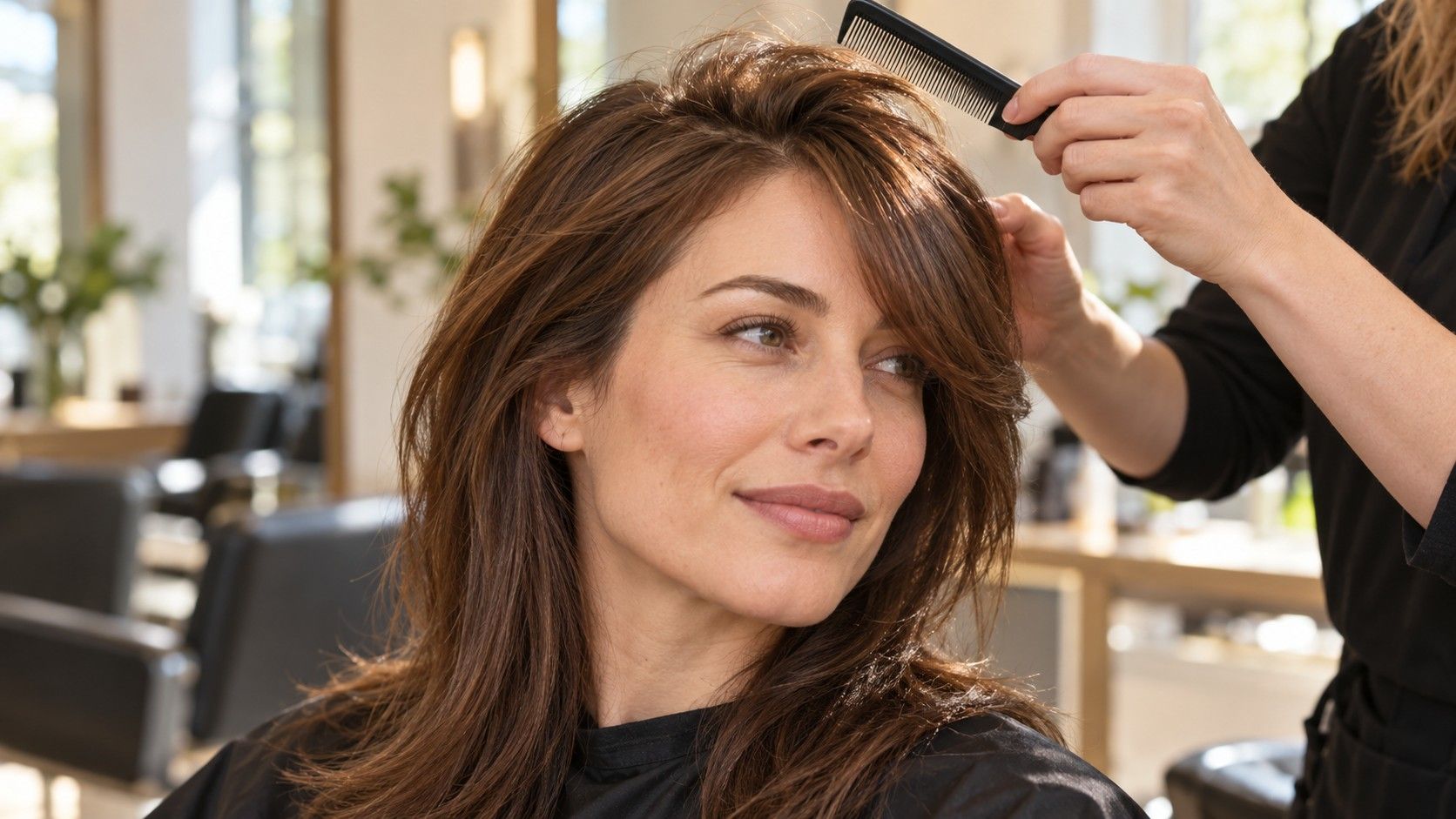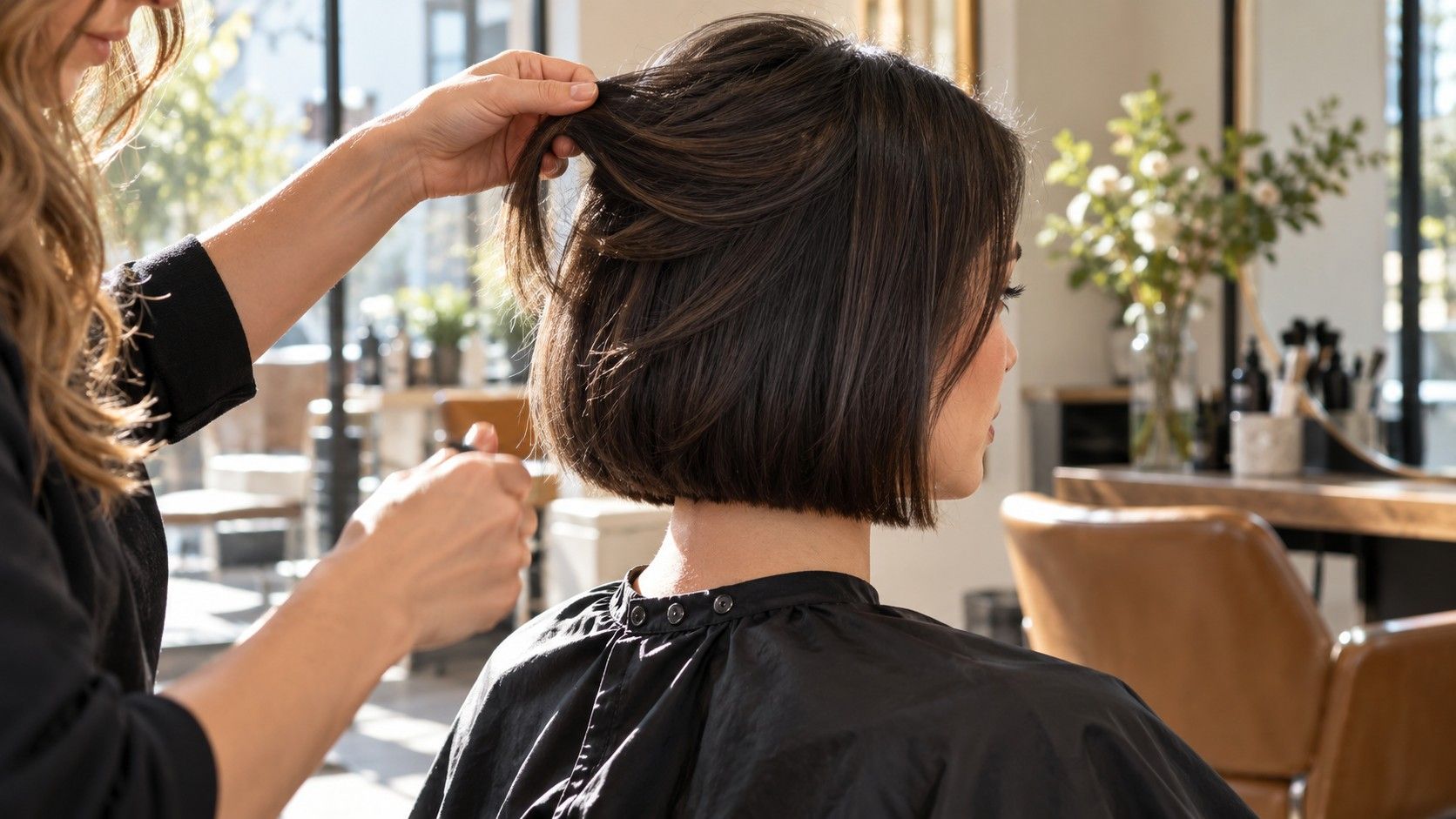
A collarbone haircut can feel short enough for a noticeable change and long enough for daily tie-backs. Yet the bottom edge touching your collarbone does not guarantee that every piece will reach an elastic. The front corners, nape and shortest layers have different distances to travel. If a ponytail is part of your work, exercise or morning routine, make that requirement part of the haircut before choosing the finishing details.
Start with the ponytail you actually wear
A low ponytail at the nape asks less of the lower back sections than a high ponytail near the crown. The shorter hairs at the neckline have farther to travel upward. Front pieces have a longer journey to a tie at the back, especially if the haircut angles shorter toward the face. Decide which placement you need most often and show it with your hands. The phrase long enough to tie up is too open to interpretation.
Do the check before the wash, with your hair dry and sitting normally. Use an elastic similar to the one you wear at home. Gather a low ponytail, then your usual higher version, and point out any sections you want to stay inside. Note whether a few pieces around the ears are acceptable or whether you need the whole front contained. A ponytail secured with several clips is a different level of convenience from one elastic and no loose strands.
Hair length is only part of the result. A thick bundle may need more reach around the tie, and a slick finish can let short pieces slide free. A looser ponytail may hold differently from one pulled high and close to the scalp. Avoid pulling harder to force a marginal length into place. Your useful test is a comfortable tie that stays together during the movement you expect, such as looking down at a desk or turning your head.
Check the shortest pieces before choosing the bottom edge
The longest section can reach the collarbone while a face-framing layer stops at the cheek or chin. Those short pieces may look good when worn down but cannot be expected to reach every ponytail. Ask the stylist to show the proposed shortest layer on your existing hair. Follow its path back toward the elastic. If it clearly stops short, decide whether you want to change the layer length or accept using a clip.
The nape deserves its own check. A longer front and shorter back can produce an elegant shape down, but the back is exactly where a high ponytail needs extra reach. Ask to see the back outline in the mirror before settling on an angled cut. For someone whose priority is a reliable tie-back, a gentler angle or a level perimeter may be easier to work around than a sharply lifted nape.
Allow some margin rather than choosing the shortest possible length that just touches the tie. There is no single extra measurement that works for everyone: head shape, hair thickness, texture and ponytail position all change the distance. Have the stylist demonstrate on your hair. If you are moving from much longer lengths, keeping a slightly longer first version can give you time to learn how the new shape behaves.
Allow for the shoulder flip and your natural texture
Hair ending near the shoulders often rests against clothing or the shoulder itself. The ends can turn outward on one side and under on the other, even after an even cut. This is especially noticeable when the front falls forward and the back sits on a shirt collar. A collarbone haircut in a smooth photo may have been brushed into place immediately before the shot. Ask how the same length is likely to sit with your usual drying method.
Bring a dry photo of your own hair if it changes greatly after washing. Waves may lift parts of the perimeter, while curls can bring the finished length higher than it looks wet. Instead of requesting a fixed allowance for shrinkage, discuss where you want the dry ends to sit. The stylist should assess the texture and the way different sections contract. That dry position is also the one that matters when you gather a ponytail.
If you switch between natural texture and a smooth blow-dry, test both expectations in the consultation. A haircut that reaches a low tie when stretched smooth may shed front sections when the natural bends return. Choose the length around the finish you depend on most often. You can still wear a different finish occasionally, but it helps to know whether it will need pins, a lower elastic or a half-up arrangement.
Choose front pieces for your tie-back routine
Long face-framing pieces can soften the outline without requiring a short fringe. Their starting point matters more than the label. A piece beginning around the chin has a different reach from one beginning below the jaw, and both may be called long layers. Ask where the shortest front strand will finish when dry, then check whether it can travel behind your ear and toward the place you tie your hair.
For exercise or work that needs the front contained, demonstrate the practical movement. Bend your head forward, turn to each side and return upright. If the pieces fall over your face, discuss leaving them longer. If you enjoy some loose hair at the temples, choose that deliberately and keep a small clip available for occasions when you need it off your face. A styled tendril in a reference photo can become an irritating loose section during a busy day.
Bangs create a separate decision. Curtain bangs may sweep neatly into longer sides after a blow-dry, yet still escape from an elastic. If you already style bangs daily and like them, a collarbone cut does not require removing that habit. If your goal is one easy ponytail, ask how much of the front will remain outside it. Make room in the decision for your glasses, usual part and whether you tolerate hair resting on your cheeks.
Compare a firm edge with gentle layers
A mostly one-length perimeter keeps more ends together at the bottom and makes it easier to judge the length needed for tying back. It can be useful when the ends already look light. Gentle layers may distribute dense hair or add movement, but each shorter section creates another length that needs to reach the tie. Ask to preserve the sections that are essential to your ponytail before discussing how much movement to add elsewhere.
For a practical medium haircut ponytail, the comparison is less about following a label and more about the short points hidden within it. A layered lob can retain long front pieces; another version can have cheek-length sections and a short back. Show photographs from behind as well as the front. If a photo shows only hair worn down, it gives you no evidence about how cleanly the style ties up.
You can also change the feel without making every layer shorter. A stylist may discuss a lighter internal shape while maintaining the outside length, depending on your density and texture. Explain where your present hair feels bulky and ask what the suggested change will do when gathered. Removing weight does not necessarily solve every ponytail problem: if pieces become too short, less bulk can come with more escapees.
Test the finished length before the final refinement
Tell the stylist early that you want a tie-back check before further shortening or texturizing. The useful point is when the main shape is established and the hair is dry enough to judge its normal reach. Recreate your usual part, gather the intended ponytail, and look at the nape and sides in a mirror. This check is easier to act on while there is still some length available to refine.
Move gently rather than judging a motionless pose. Look down as if reading, turn toward each shoulder, then loosen and retie the elastic yourself. You may gather it in a different place from the stylist. If small sections escape, decide whether a lower position solves the issue comfortably. Ask how the tie-back will change as the cut grows, especially if your down style depends on ends sitting above a collar.
Before you leave, wear the haircut down again and check the dry outline. Confirm how to refresh a shoulder flip, which pieces may need a clip, and where to put the elastic for the easiest hold. Keep a quick photo of the front, side and back for your next appointment. It records the length that worked for your ponytail far more clearly than asking for the same collarbone haircut several weeks later.