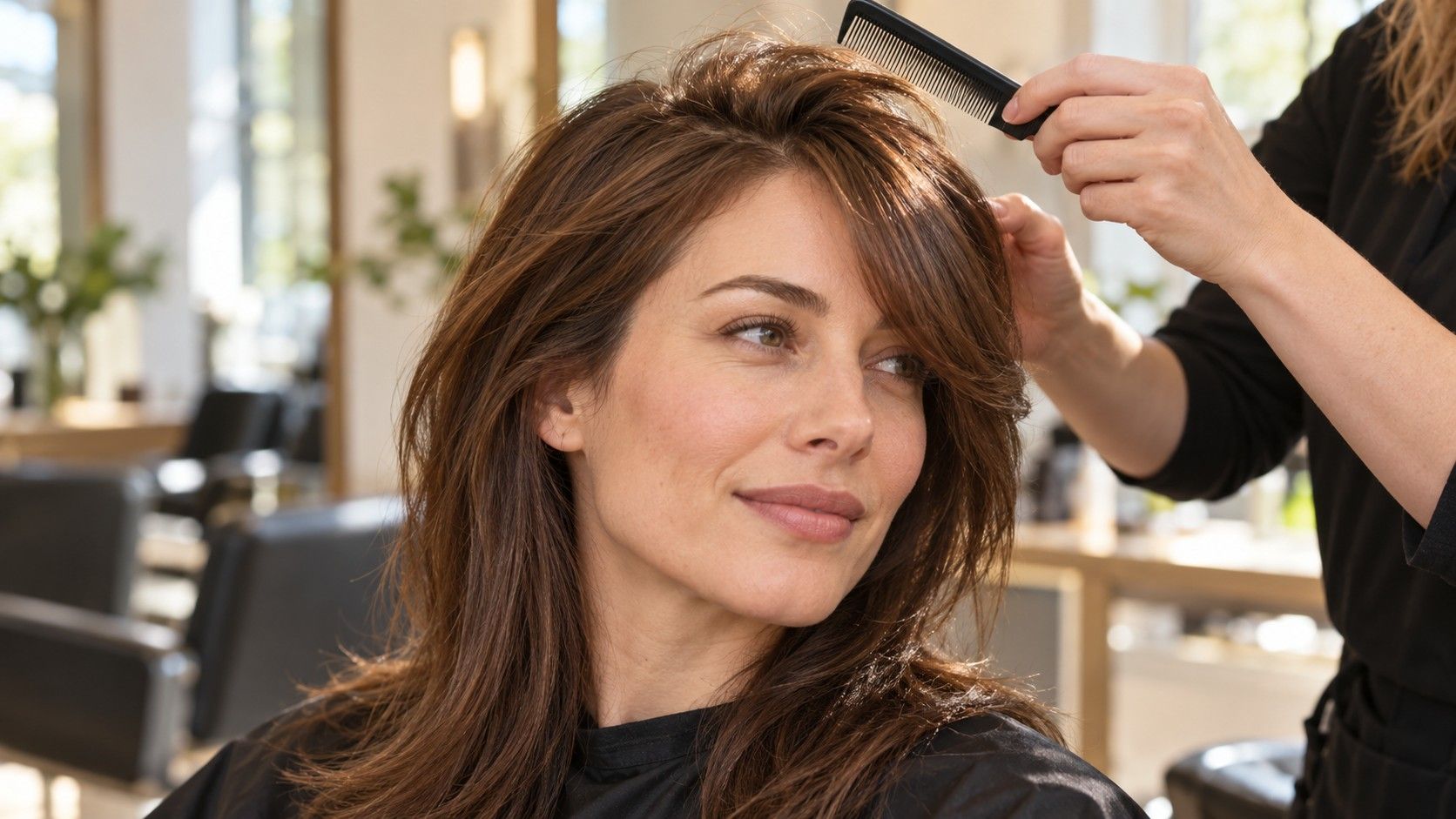
Curly bangs can sit close to the brows one day and spring much higher the next. The challenge is choosing a shape you like across that variation, rather than judging the length only while the front is stretched or wet. Before your first fringe, watch the curls you actually have, decide how short you are comfortable wearing them and leave room to adjust the cut after you see the natural finish.
Watch how the front curls dry without stretching
Observe the front section during a normal wash routine. Let it dry the way you usually wear it, with your usual parting and without pulling the curls straight to inspect the length. Notice which pieces form together, where they separate and whether one side curls more tightly. The front can behave differently from the lengths at the back, so a general description such as wavy or curly may miss the details that matter for a fringe.
Take a clear front photograph when the hair is dry, followed by a side view. Use them to record where the front curls land in relation to the eyebrows, eyes and cheekbones. A short note about the drying method helps: air-dried, diffused or brushed out. You are building a record of your own hair's behavior, not trying to assign it a perfect category.
Compare that natural position with the length when you gently extend a curl. The difference explains why a wet or stretched length cannot be treated as the final fringe position. Do not apply a universal number of extra inches from someone else's haircut. Different pieces on your own head may spring back by different amounts, and changing the finish can change what you see.
Keep the hairline visible in at least one photograph. A cowlick, a natural split or a section that sweeps sideways may affect how the bangs sit. If you have been pinning the front back, let it settle before judging it. Tell the stylist how often you wear it away from the face and whether you want to keep that option after the cut.
Choose the shortest curl you are comfortable wearing
Start with the dry position you would accept on a springier day. Is a curl above the brow comfortable, or would you prefer every front piece to sit lower? This is a preference worth stating plainly. A photograph with one perfectly arranged curl over the eyebrow may hide how exposed you would feel if that piece dried shorter.
Think about the fringe as several curls with different positions, rather than a straight line cut across the forehead. A softly uneven edge may fit the curl pattern you wear, while a more continuous outline may require more deliberate arrangement. Bring a reference that shows the kind of edge you like, then ask how your front curls could form a related shape.
Check the shortest layer against the rest of the haircut. A compact fringe on long hair creates a strong difference between front and back. Longer pieces at the temples can connect the bangs to the sides, but they can also fall into the eyes or separate from the central section. Ask where the shortest point would be and how the side pieces would blend into your current perimeter.
Glasses make this conversation more concrete. Wear your everyday frames to the consultation and notice where the curls touch them. A fringe that rests on top of the frames may be comfortable for one person and distracting for another. Explain whether you read with your head bent forward or need your forehead clear for a work headset. These small details can influence the usable length.
If the proposed position feels too short, say so before cutting. You can discuss starting longer and reviewing the result once it is fully dry. That may leave more coverage than your eventual goal, but it gives you a chance to see how the newly shortened pieces settle. A digital preview or reference photo cannot remove that uncertainty.
Keep enough width without taking too much hair
The width and depth of the section affect how substantial the fringe looks. Taking hair from farther back can make a fuller section, but it also reallocates hair that currently contributes to the top or sides. On finer hair, that trade may become visible around the temples. On denser hair, a deep section can create more front volume than you expected.
Ask the stylist to show the proposed section before it is cut. Look at it with the remaining hair down so you can see what has been borrowed from the sides. A reference with thick bangs and equally thick side lengths may not reflect your own density. The aim is to choose a distribution you like across the whole haircut, not to make the fringe work in isolation.
Consider how the curls group naturally. Dividing a curl clump to force a narrower outline may make the section behave differently after your next wash. Let the stylist see how you ordinarily arrange the front and discuss whether the planned fringe follows or changes that pattern. No particular section shape works identically for everyone.
Use the outer corners as a practical checkpoint. Would you prefer the fringe to end near the brows, taper into the temples or become longer cheek-framing pieces? Explain the effect you want rather than requesting a wide section because it looks fuller in a photograph. The corners affect both coverage across the forehead and how easily you can sweep the front aside.
Compare fringe on a wash day and later in the week
Before the appointment, notice what happens to the front between washes. The curls may flatten after sleep, separate at the parting or become fuller around the hairline. Take a second photograph on a day you would normally go out without restyling. That ordinary version deserves as much attention as the carefully finished wash-day picture.
Decide how much resetting you are willing to do. You may be happy to dampen and arrange the front separately, or you may want to leave it alone most mornings. Say which routine you prefer. A curly fringe that relies on daily arranging can still be a good choice, but that effort should be a deliberate part of the decision.
Think about the tools you use now. If you normally air-dry, do not judge the cut only by a salon finish created with a diffuser and individual curl arrangement. Ask to see how the bangs sit when handled in a way close to your normal routine. If you want to learn a new method, ask for a demonstration and try the hand movements yourself before relying on them.
Check your practical escape route for days when the front feels awkward. Longer side pieces may clip back while the center remains loose; a band may move the whole fringe away from the face but alter the curl shape afterward. Do not assume every piece will reach a ponytail. Show the stylist how you usually tie or pin the hair so the limitation is visible.
Leave time to become familiar with the new shape before deciding it needs another cut. A curl disturbed by repeated touching can look different from one left to settle. Photograph the front after your normal routine and describe the specific issue if you seek an adjustment: one central curl sits too low, a corner spreads too wide or the parting leaves a gap.
Plan a consultation that leaves room to adjust
Bring references with a similar curl scale and density where possible. A photograph of loose, open waves can still show an edge you like, but explain that you are borrowing the outline rather than expecting the same texture. Add one photo of your own unarranged front curls so the conversation stays grounded in your starting point.
Ask how the stylist wants you to arrive. Explain your normal products, drying method and whether the front has been straightened or pulled back. The important thing is that the hair presented at the appointment gives useful information about the finish you intend to wear. Follow the agreed preparation rather than changing your whole routine just to make the hair look tidier.
Agree on the shortest acceptable dry position, the width of the section and the amount of daily styling you want. Ask when the final shape will be checked and how you can discuss an adjustment if it sits differently after your own wash. These are useful questions for a first curly bangs haircut because the final decision involves both the cut and the way your curls settle.
Before removing more, look at the fringe fully dry and resting without being stretched into place. View it straight on and from the side, with your glasses if you wear them. If you are uncertain about going shorter, keep that uncertainty in the conversation. A slightly longer first version can be assessed in your own routine before you decide which curl, if any, should sit higher.