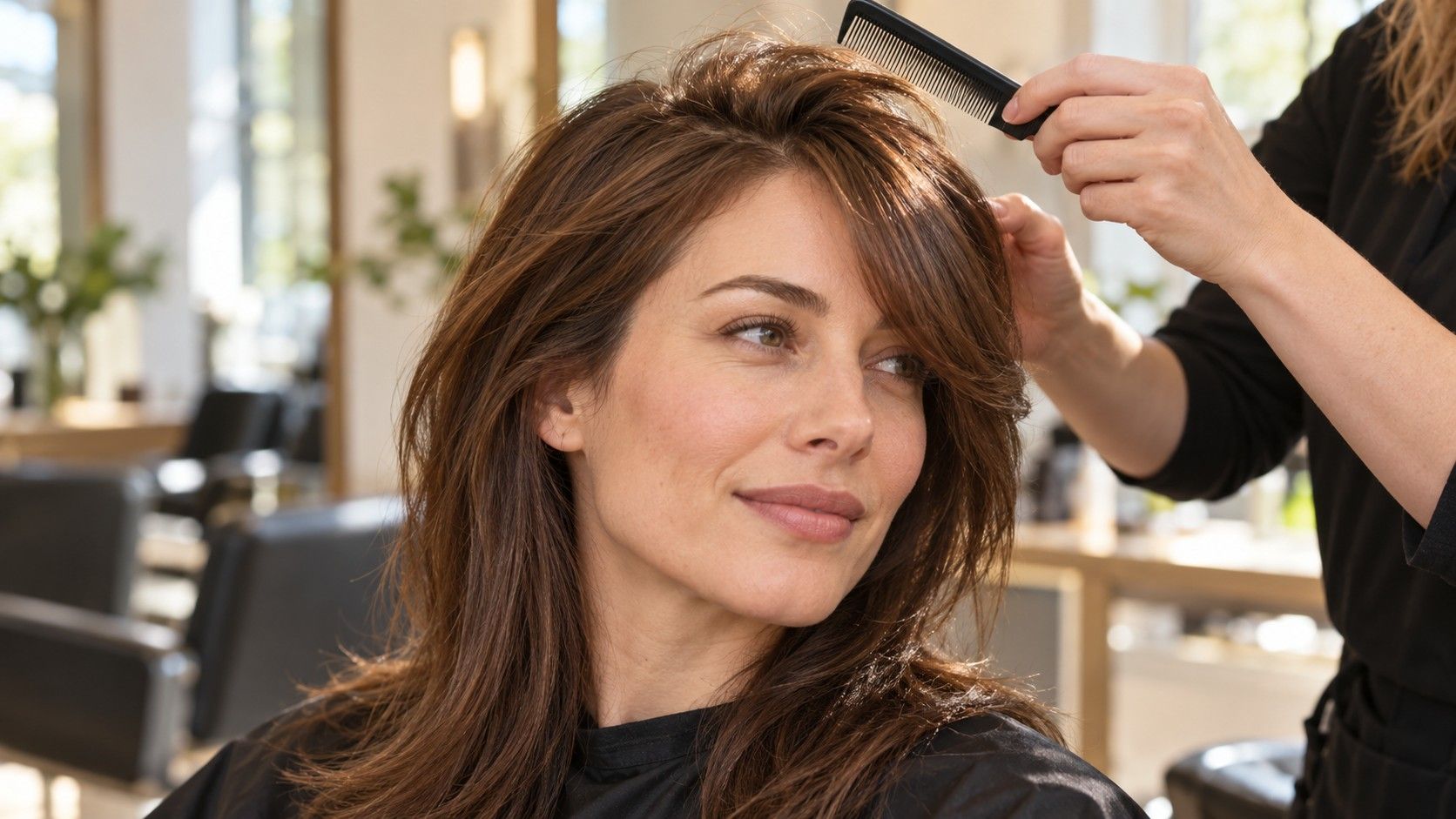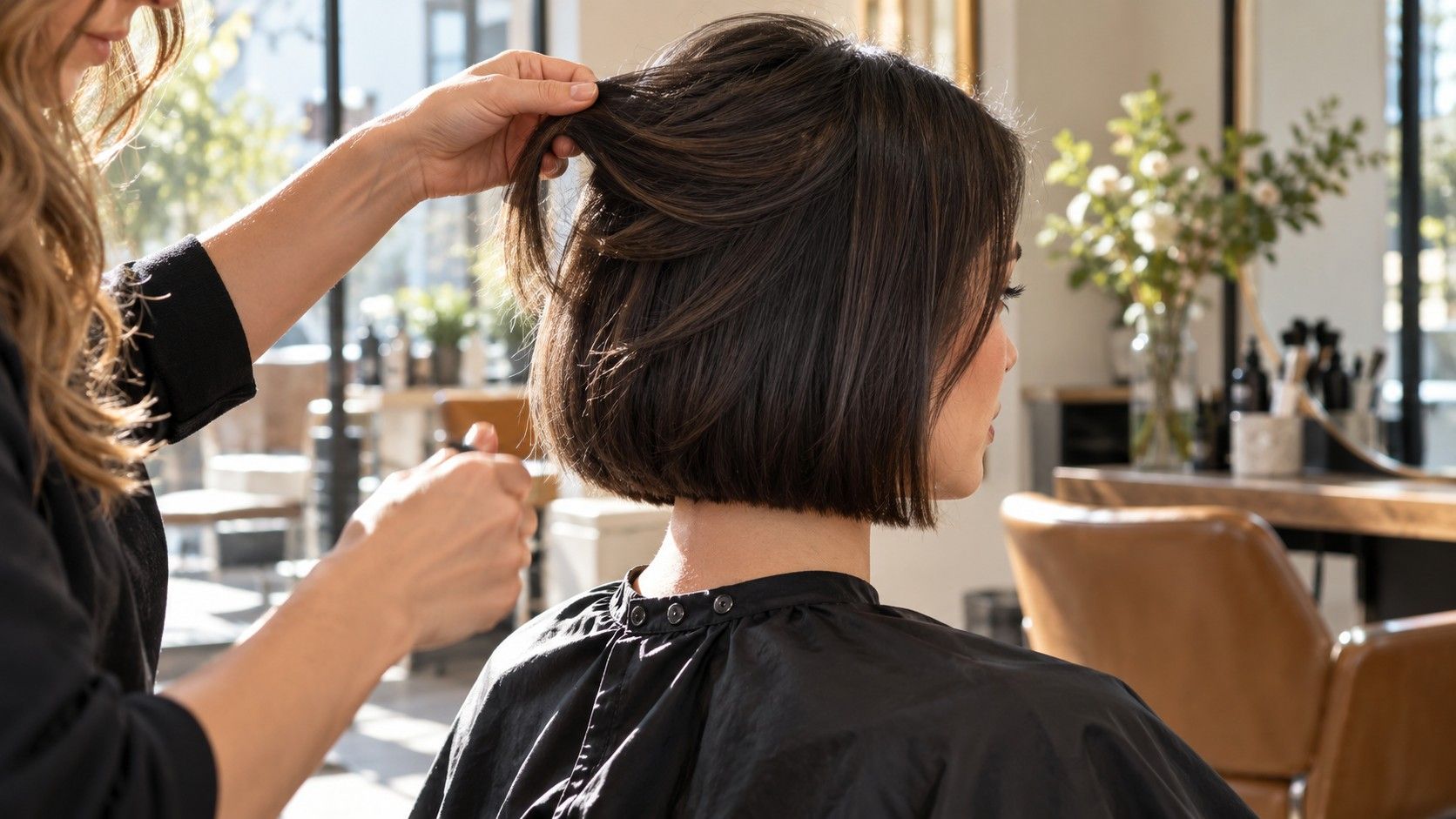
Two bob photos can have almost the same length and behave very differently once you leave the salon. One keeps a dense, straight edge; the other breaks into pieces around the cheeks and neck. The useful choice is about where you want weight to sit, how your hair dries, and how much reshaping you enjoy each morning. Before deciding between a blunt bob and a layered bob, look past the front view and check the sides, the back and the ends.
Decide whether you want a solid line or visible movement
A blunt bob has a strong perimeter: the bottom edge reads as a deliberate line. That does not mean every strand inside the haircut must be identical in length. A stylist may adjust the interior while keeping that outline intact. Layers are shorter lengths within the shape, and they can be obvious around the face or almost hidden inside. These choices can coexist, so asking for either blunt or layered without explaining the result leaves plenty of room for interpretation.
Start with the part of a reference photo you actually want. Is it the sharp corner beneath the jaw, the rounded back, or the loose pieces near the cheek? A bob with a firm edge often looks more graphic when worn straight. A layered version may separate more easily when waved or scrunched, but its finish depends on the texture underneath. Soft lighting, a turned head and carefully arranged strands can hide the shape in a photograph.
Compare three views of the same haircut if possible. From the side, notice whether the front slopes down toward the chin. From behind, check whether the nape is exposed or covered. Then look at the top: a neat center part and a deep side part distribute the same hair differently. Bring a second photo of an edge you dislike. Explaining that you want movement without wispy tips is often clearer than simply asking for a soft bob.
If the ends look fine, protect the perimeter first
Fine describes the thickness of individual strands; density describes how many strands are present. Hair can be fine and plentiful, or coarse with a less dense edge. Look at a small section near your shoulder against a plain shirt. If the last few centimeters look much more transparent than the section above, discuss where a fuller line could be established. Cutting that sparse portion may change the outline more than adding layers would.
A mostly one-length bob can concentrate the available hair at the bottom. Heavy layering removes some strands from that line, which may leave ends looking lighter than the reference photo suggests. That does not rule out every layer. A small adjustment near the face, or a few carefully placed interior sections, is a different proposal from short layers through the crown. Ask the stylist to point to the shortest planned piece before cutting.
Make the comparison in your normal finish. A smooth blow-dry can gather scattered ends into a tidy edge, while an air-dried finish may separate them. If you rarely use a brush and dryer, say so before choosing the photo. Also mention a natural part that keeps reopening. A bob that looks full after being swept to the opposite side may settle back into a different outline later in the day.
For dense hair, choose where the weight should leave
A thick bob can feel heavy at the sides, underneath the ears, or across the back; those are different problems. Point to the bulky area rather than requesting a general thinning-out. You may want a strong bottom edge but less hair packed behind it. Interior layering can be discussed for that purpose. Shorter surface layers create a more visible change, especially when they fall away from the head.
Ask how the proposed technique will show when the hair is dry. Scissors, a razor and texturizing shears can create different finishes, and their effect also depends on section size and placement. The tool name alone does not tell you whether the result will be soft or sparse. If previous texturizing left ends too feathery, bring a photo of that result and describe exactly where it became hard to manage.
A useful consultation question is: can we keep the perimeter solid while removing weight from this area? The answer may involve a different length, a subtle graduation at the back, limited internal layers, or leaving more weight than you expected. Very short internal pieces may stand away from the head rather than lie flat. Agree on the visible outline and the shortest length first, then let the stylist explain how they would connect them.
Let waves and curls decide where the edge lands
The jaw and the shoulders are active landing points. A wave that bends outward near the jaw can make a bob appear wider there, while a shoulder can push the ends up even when the cut is even. Hold the hair near the length you are considering and watch which bend remains. This rough test cannot reproduce a haircut, but it can reveal that the sleek chin-length photo relies on a finish you do not usually wear.
With curls, discuss the length as it will sit dry and with your usual part. The amount of lift from wet to dry varies across heads and even across sections on one head. A front curl may sit above a neighboring piece after drying. Do not use a universal allowance measured in centimeters. Ask the stylist to inspect the pattern and agree whether the finished shape will be assessed in its natural state.
Layers may help distribute a curly or wavy shape, but more layers do not automatically mean easier styling. Short sections can spring higher, and removing too much weight can change how nearby pieces gather. Bring photos of your own hair on an ordinary wash day. They show the stylist more about uneven bends, a flat crown or a wide lower section than a polished inspiration photo can.
Match the bob to an ordinary morning
Think through your next weekday rather than the first evening after the appointment. A blunt line worn smooth may need a quick reset at the nape after sleep. A loosely layered bob may need dampening and reshaping where the shorter sections flatten. Neither option has a fixed styling time: the useful estimate comes from your present routine and the finish you expect. Ask to see a realistic version before any final polishing with hot tools.
Check practical habits that disappear in cropped photos. If you tuck hair behind your ears, the front needs enough length to stay there without constant adjustment. If you use glasses or headphones, look at how the side pieces sit around them. If tying everything back is essential, a short bob may not meet that requirement, regardless of its layer pattern. A small half-up section and a full ponytail are different promises.
As the cut grows, a strong perimeter can lose its exact position against the jaw, and shorter layers may become less distinct. Ask what change is likely to bother you first and what a future trim would restore. Avoid choosing a maintenance schedule only because someone else returns at a particular interval. Your preferred edge, growth and tolerance for changing shape matter more than a standard calendar.
Describe the outline and finish before the scissors start
Use concrete language at the chair: I want the bottom edge to look solid, I usually air-dry, and I do not want the shortest layer above this point. Show that point on dry hair. Then establish the front and back length separately. A chin-length front with a lifted nape is a different haircut from a level bob that covers the neck, even if both photos are labeled blunt.
For a layered result, clarify whether you want visible pieces around the face, movement throughout, or only less bulk inside. Ask what you will see when the hair hangs without styling. If you are uncertain, discuss keeping enough length and weight for a cautious first version. More hair can be removed during the appointment; an overly light edge needs time to grow before it can become dense again.
Before leaving, look at the dry haircut from the side and back, with your usual part restored. Tuck one side behind your ear, turn your head and let it fall naturally again. Ask the stylist to demonstrate the smallest useful styling step while you watch. The right comparison among bob haircut ideas is the one that connects a recognizable shape to the way you will actually wear it tomorrow.