Fine straight hair makes the line of a haircut easy to see. A few centimetres at the bottom, a shorter front section or a different parting can change that line noticeably. Before choosing between a bob, a longer blunt cut and a layered shape, look at where your ends already feel substantial and how much styling you want to do. The aim is a shape you enjoy in its ordinary finish, with deliberate choices about softness and movement.
Check density at the ends before choosing a length
Fine refers to the diameter of individual strands. Density refers to how much hair you have across the scalp. These are separate features: fine hair can be dense, and thicker strands do not automatically create a full-looking perimeter. Tell the stylist what you notice in the ends instead of assuming that “fine” explains every part of your haircut.
Look at the hair hanging naturally against a contrasting top. Check the front, sides and back. Are the longest ends a solid band, or can you see through them in places? Do the sides look shorter or less substantial than the centre of the back? These observations help establish where a new perimeter might sit. They are haircut planning details, not a way to diagnose the condition of your hair.
Ask the stylist to show you two possible length lines before cutting. One might preserve nearly all the length, while another removes more of the lightest ends. Seeing both against your shoulders makes the tradeoff clearer. A shorter line may look more compact, but whether you prefer it depends on the shape, your texture and how you wear it.
Include the practical minimum length. If you need to tie the hair back, ask which front pieces would escape at each option. If you prefer it loose, check where the ends meet your jaw, neckline and shoulders. A cut ending on the shoulders may turn or catch differently from one that clears them. Point to a resting position rather than relying only on names such as “bob” or “lob.”
Compare photographs taken in similar light. A dark shirt behind light hair can emphasize every gap at the ends, while an overexposed background can erase the outline. Neither is a complete picture. Use an ordinary room, a clear background and an unfiltered image when recording the starting shape for a consultation.
Compare a crisp perimeter with soft face framing
A blunt-looking perimeter gives the eye a clear line to follow. It does not require every haircut to be a single length in every area. You can discuss a firmer bottom edge alongside a small amount of front shaping. What matters is how much hair leaves the perimeter and whether the sides still have the fullness you want.
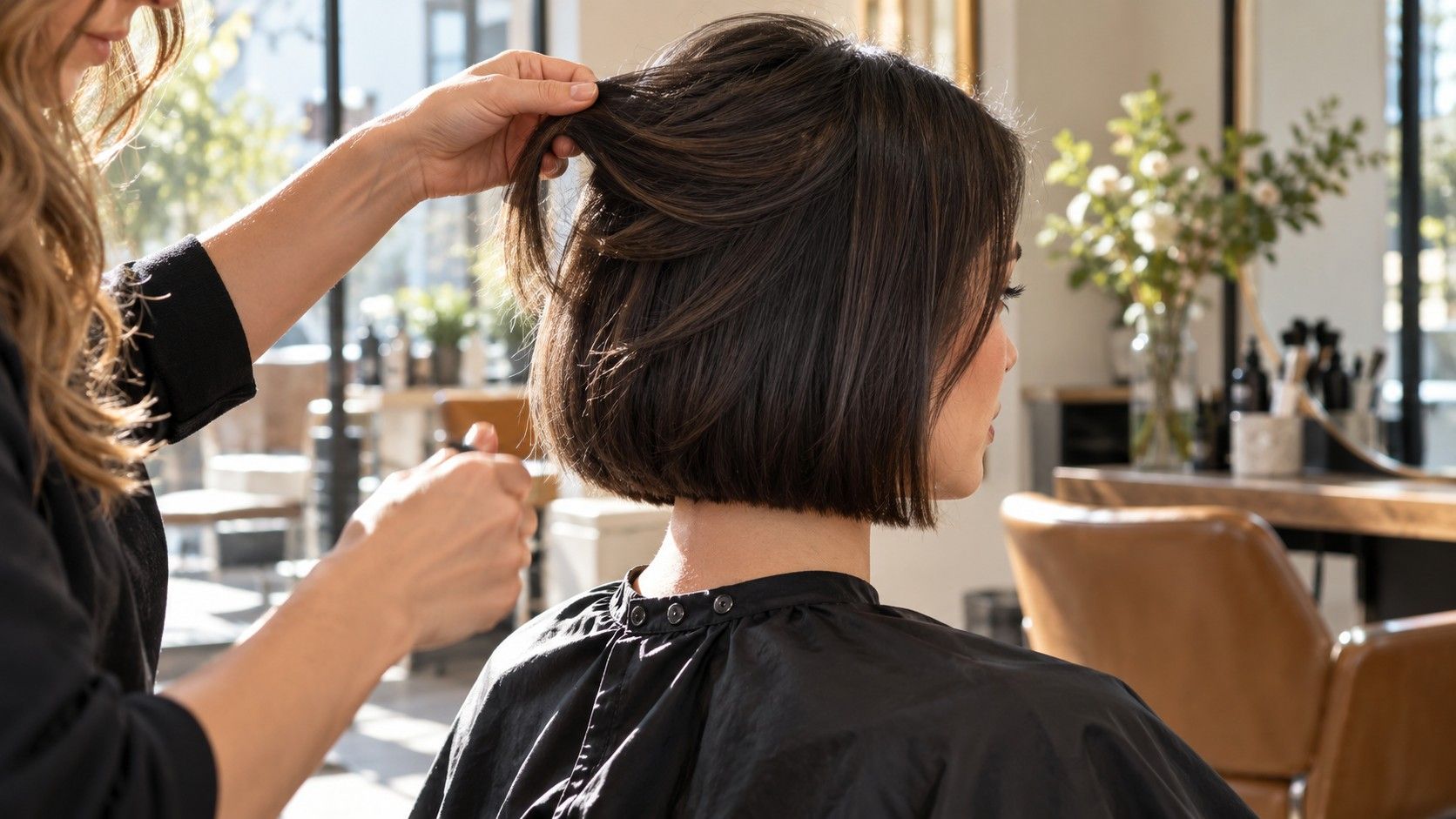
If you are considering a fine-hair blunt cut, choose references that show it without the ends curled under. A smooth bend can hide how the edge actually falls. A straight or lightly styled back view gives you a better sense of the line. Ask how that image compares with your starting length and density rather than treating the reference as a result the cut must reproduce exactly.
For the front, choose a landing point you can describe: below the jaw, near the collarbone or close to the main length. A shorter face frame can feel like a much larger change than a small trim across the back. Ask how wide the front section will be and how it connects to the rest, especially if your side lengths already look lighter.
Think about where the pieces go during the day. If you tuck both sides behind your ears, a short front section may fall out repeatedly. If you wear a ponytail, it may remain loose. You might welcome that softness or find it annoying. Try moving a section of your current hair to approximate the proposed position, while remembering that a folded section does not predict the finished cut perfectly.
Bring a reference for the edge and another for the front only if you can explain what each contributes. “This solid bottom line, with a little softness here by the jaw” is a clear request. A collection of images with different lengths, density and styling can otherwise leave the stylist guessing which feature matters most.
Keep layers purposeful and limited
Layers are not automatically wrong for fine straight hair. They can help shape a particular area or change how the hair moves. The important questions are where they begin, how short they are and how much hair remains at the bottom. A subtle adjustment through dense hair is a different proposition from extensive short layers through an already light perimeter.
Name the problem you want layering to solve. Perhaps the shape feels wide behind the ears, the front hangs heavily or the top does not join the sides as you would like. Ask what a layer would change there and how it would look when worn straight. If there is no clear reason for removing that weight, you can keep the simpler shape.
Discuss the shortest layer explicitly. A reference with long, sweeping movement may conceal quite short pieces at the crown, particularly when photographed after a blow-dry. Ask where those sections would land on your own hair. Consider whether they would remain loose when you tie it up and whether they need shaping to avoid looking separate from the longer lengths.
Texturizing deserves its own conversation. A request for “soft ends” can refer to the look of the edge, movement inside the shape or a less precise finish. You do not need to select the cutting method. Explain the effect you want and ask how the stylist will preserve the density you value. Make it clear if you dislike separated, wispy ends when your hair is straight.
A restrained first change makes the effect easier to assess at home. After living with the cut through your usual washing and drying routine, you can describe what worked. More movement can be discussed later if needed. That is a useful approach when you like the existing length but are uncertain how much layering your preferred reference actually contains.
Choose a parting that works without a full blow-dry
Your parting determines where much of the front hair falls. Arrive wearing it as you normally do, and mention if you change sides. A cut balanced around a deep side part may look different with a centre part, particularly around shorter front pieces. The stylist needs that information before deciding how the sides should connect.
Test a small parting change with your existing hair on an ordinary day. Notice whether the roots settle or repeatedly return to their usual direction. A photograph taken immediately after rearranging the hair may make the change look easier than it feels several hours later. You can prefer the appearance and still decide that daily resetting is more effort than you want.
Be honest about drying. If you usually let the hair dry naturally, ask to see the proposed outline in a natural finish. If you regularly smooth the front but leave the back alone, explain that mixed routine. A reference with rounded roots and carefully turned ends may require styling beyond the cut itself, so ask which steps create the effect you like.
Keep the routine concrete: which sections you dry, how you position the front and whether you use heat at all. Avoid choosing a shape on the assumption that you will suddenly enjoy a full blow-dry every wash day. A stylist can discuss options around your habits more usefully than around a vague promise to spend more time on the hair.
Review the back and sides in ordinary light
When comparing fine straight hair haircut ideas, include side and back views before making a final choice. The front can look full because hair is drawn over both shoulders, while the back reveals a much narrower edge. Ask to see the cut with the hair resting where it normally falls, then move it forward to compare both arrangements.
At the end of the appointment, check the perimeter against your clothing and look at the front sections without holding them in position. Turn your head gently. A useful shape should be understood in motion, even though no haircut remains perfectly arranged all day. Mention any area that appears much lighter than you expected so the stylist can assess it with you.
Keep a photograph after the first normal wash at home. Note whether the ends fell as expected, whether the front stayed behind your ears and which areas needed styling. These details provide a basis for adjustments at the next visit. They are more useful than deciding that every fine-haired person should wear the same length or avoid the same technique.
Discuss maintenance around the shape rather than a universal timetable. A precise shorter perimeter may show growth differently from a longer, softer edge. Ask what change to watch for and which part is likely to need attention first. Your next trim can follow the point where the haircut stops behaving the way you want, with length and daily effort kept in the conversation.