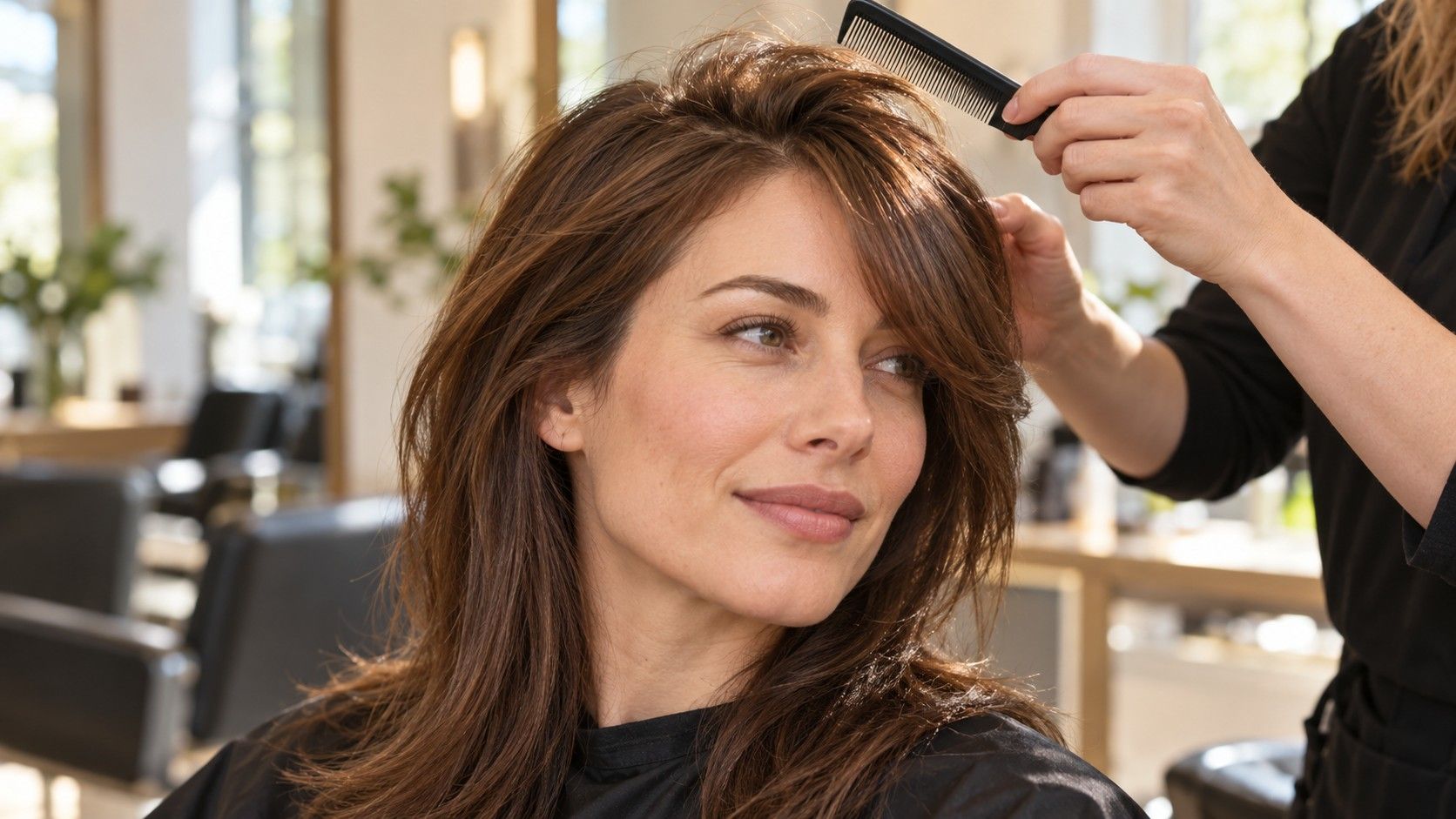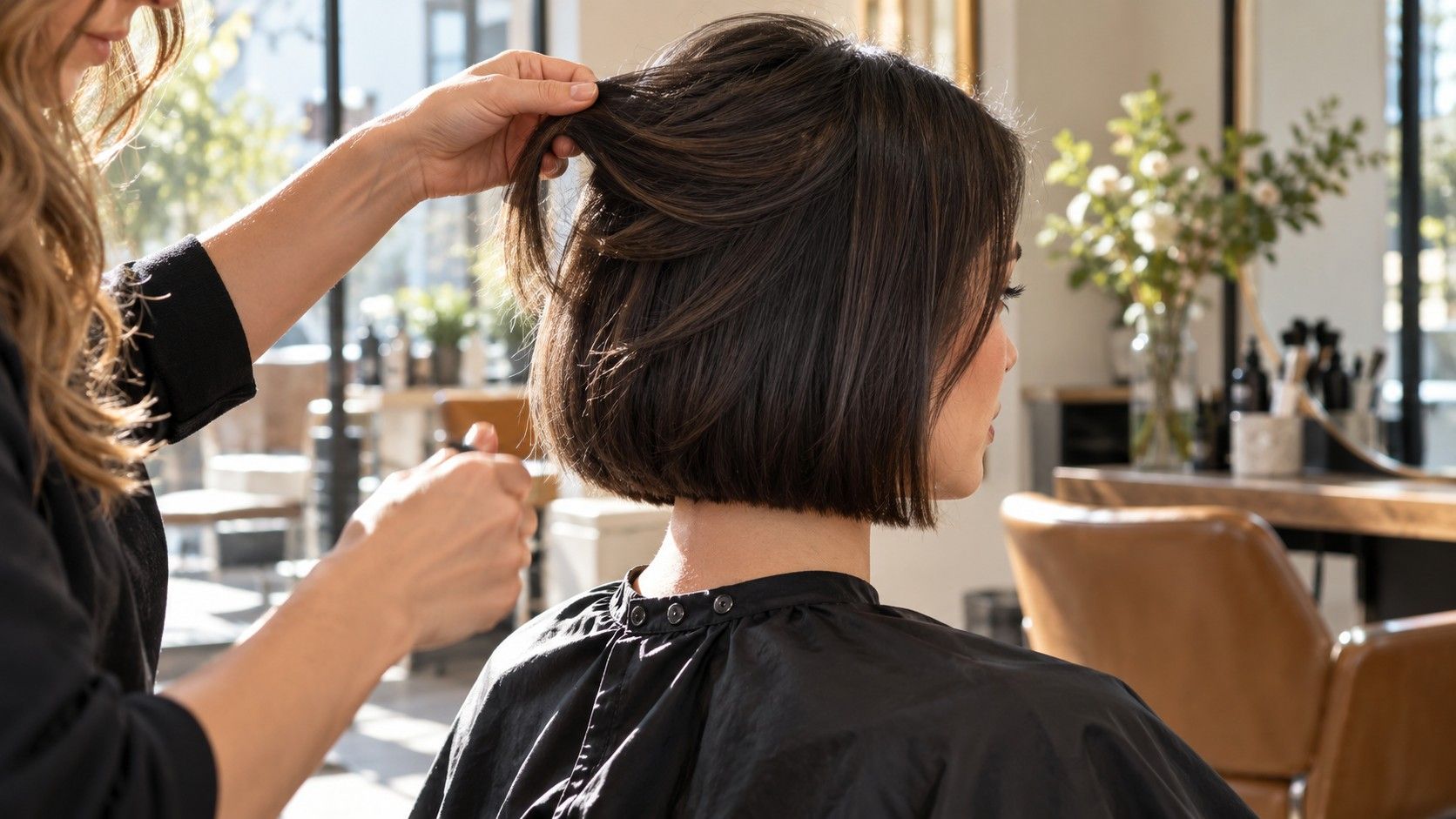
A haircut preview is easiest to judge when the photograph stays ordinary. If one image has soft window light and another has a flattering filter, you may end up choosing the photograph instead of the cut. Before trying a fringe, bob or shorter crop, make one clear reference photo and use it to compare a few specific changes. The useful question is whether the shape fits your hair and routine well enough to discuss with a stylist.
Start with a photo that shows the real outline
Stand facing a window in daylight, with the camera around eye level. Avoid direct sunshine across half your face and a bright window behind your head. Both make it harder to see where your hair ends and the background begins. A plain wall in a different shade from your hair is useful: dark curls against a dark wardrobe can disappear into a single shape.
Keep your head level and your shoulders in the frame. A tightly cropped selfie may leave no room to judge a shoulder-length cut, while a photograph taken from above changes the apparent proportions of your forehead and jaw. Place the phone far enough away that you do not need to lean toward it. If someone can take the picture, ask for a straight view rather than a fashionable angle.
Show your face and hairline clearly, following the instructions of whichever tool you choose. Move loose strands away from your eyes and remove a hat. If hair needs to be pulled back, do that gently; a severe slicked-back style can give a misleading impression of your normal roots. Keep an unaltered copy of the original. You want to notice when a preview changes the face, not simply enjoy a smoother version of the photo.
Photograph your hair in its usual condition as well. A separate image of air-dried waves, a normal parting and the ends after a working day gives a stylist information that a clean upload photo cannot. The upload is a base for a visual experiment. Your everyday photograph records the material the stylist will actually cut.
Compare length before changing the finish
Begin a free hairstyle try-on with a small length range. Compare a collarbone cut, a shoulder-length cut and a chin-length bob while keeping the color and broad texture similar. That isolates a decision you can name. A smooth platinum pixie beside long dark curls changes length, color, volume and styling at once; it is a poor test of whether you want shorter hair.
Use visible landmarks rather than a style name alone. Where do the ends sit relative to the chin, neckline and shoulders? Does the front reach your lips or your jaw? Different photographs can be labelled “long bob” while showing quite different lengths. A cut that clears the shoulders may fall differently from one whose ends rest on them, so show the actual outline you mean at a consultation.
Once you prefer a length, compare details within it. Try a side part against a middle part, or a blunt-looking outline against a softer edge. Keep each round small enough that you can say what improved. Three clear alternatives are easier to judge than twenty almost identical results. Write a short note beside each: “like the jaw-length front,” “too much width at the sides,” or “want this length with less polished styling.”
Then test the practical limit. If you tie your hair up for work, show the desired length to a stylist and ask what will remain loose around the face and neck. A front-facing preview cannot confirm whether a ponytail will hold every layer. Nor can it show how the back will behave under a coat collar or after sleeping on it.
Check where the preview leaves your hairline
A convincing overlay needs to meet the forehead and temples in plausible places. Look at the roots before judging the ends. Has the image lowered your hairline, filled in an exposed temple or moved the parting? Those changes may make a fringe look appealing without describing a haircut your own hair could produce. Keep the idea, but do not treat that altered boundary as evidence.
Fringes deserve a separate check. Notice where the proposed fringe begins on the crown and how much hair appears to feed into it. A dense, wide fringe uses a different amount of hair from a light fringe with spaces between strands. If your hair is fine or less dense at the front, bring that observation to the stylist. A picture cannot establish how much usable hair is available there.
Check your normal parting and any directional growth you already manage. If your front section springs away from your forehead each morning, a perfectly flat digital fringe has skipped a real styling question. Ask how the proposed shape would work with that growth, what daily adjustment it might need and whether a longer version would give you more flexibility.
Do the same around the ears and neck. A short crop may appear to tuck neatly behind an ear because the result has redrawn the ear or removed existing strands. Inspect those joins at normal size and then closer. A small visual mistake does not make the whole idea useless, but it tells you which details need a real photograph or a stylist's explanation.
Keep the same face and lighting in each comparison
If you want to try on hair styles for free, keep a consistent base photo throughout the session. A new selfie can introduce a different head angle, expression or camera distance. Even the position of your shoulders changes how long a haircut looks. Choose the base once, then return to it whenever you start comparing a new set of lengths.
Some results may change more than the hair. Compare your eyes, jaw, skin and earrings with the original. If these shift, avoid using the image to judge facial proportions precisely. Cover the hair briefly with your hand on the screen and see whether the remaining face still resembles the original photograph. You are looking for a useful indication of shape, not a more flattering portrait.
| What changes | Why it confuses the choice | What to compare instead |
|---|---|---|
| Hair color and length together | The brighter color may drive the preference | Similar color across three lengths |
| Face angle between photos | Jaw and forehead proportions look different | The same straight-on base image |
| Straight finish versus full curls | Texture changes the outline and apparent length | Comparable texture first, then a styling variation |
| Retouched face or hairline | The result may rely on changes beyond the haircut | The original face with clearly noted limitations |
Look at the shortlisted images at the same display size. One large result surrounded by two tiny thumbnails receives an unfair advantage. Put them side by side if your device allows it, or switch between them without zooming. Give each a plain label with the length and parting; dramatic names can make an ordinary variation seem more significant than it is.
Bring a usable reference to the salon
Save a short list according to the tool's available options and permitted use. Before relying on an export, check whether saving is available and whether the saved result retains enough detail. Keep the original alongside it. If saving is unavailable, record the cut's useful features in words and look for a reference photograph that shows the same shape.
Bring one preferred result and, if useful, one alternative. Explain what each represents: the length from one, the softer front from another, or the amount of forehead you want visible. Say which parts you dislike as well. “I like the outline but do not want a daily blow-dry” gives the stylist a more workable starting point than asking for an exact copy of a generated picture.
Ask about hair texture, density and maintenance before committing to the shortest version. Straight hair, waves and curls can show a different resting length, and a polished preview does not reveal how the look was styled. Have the stylist describe the cut on your hair after normal drying, then ask what changes with heat styling or additional products.
Check the back and side views during the conversation. Your preview may only answer the front-view question, while the nape, crown and layers determine much of the everyday feel. Agree on a visible length reference and how much flexibility you want for tucking, tying or changing your parting. The most useful result of the comparison is a clear set of choices that both of you can describe before the scissors come out.