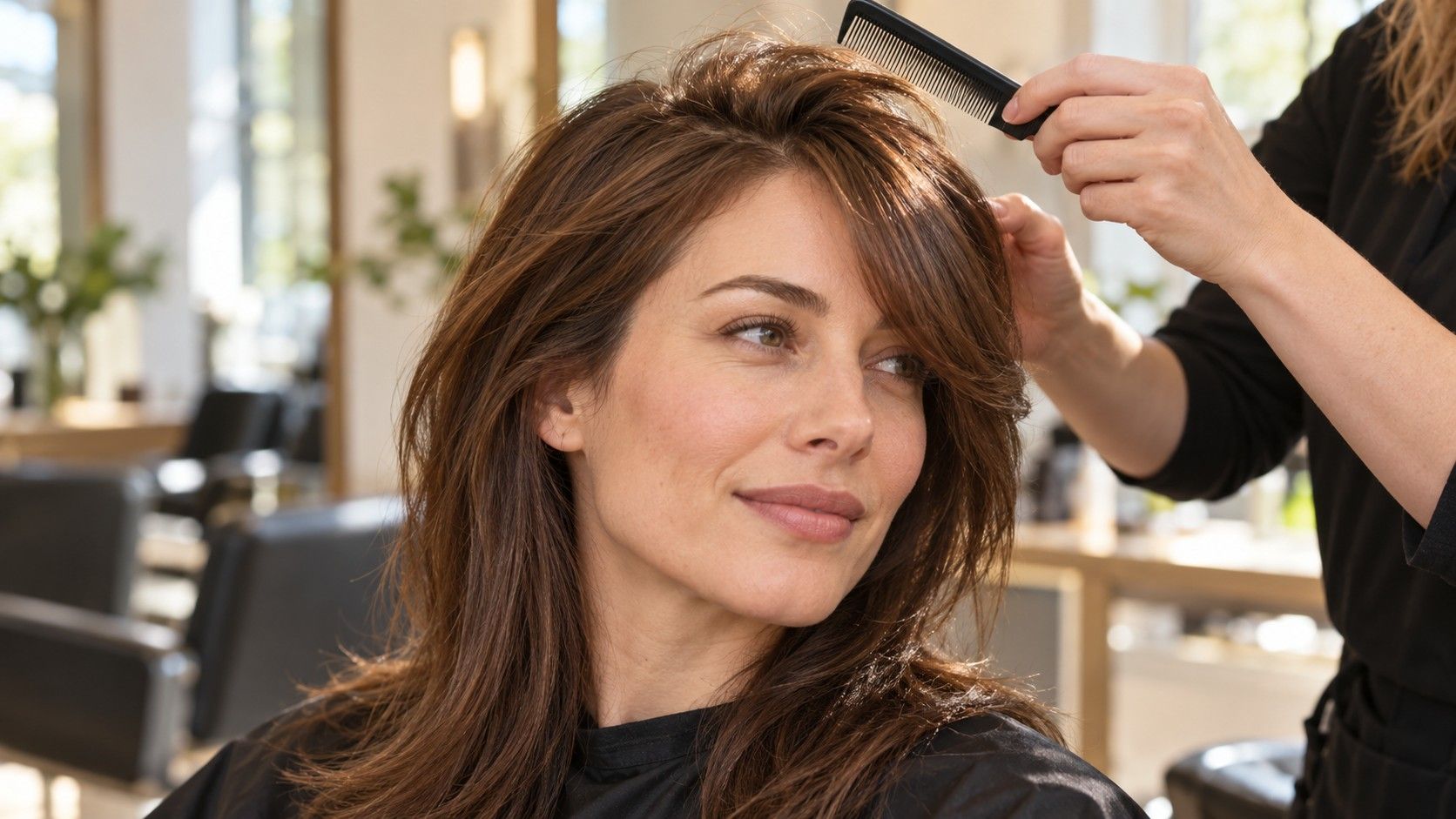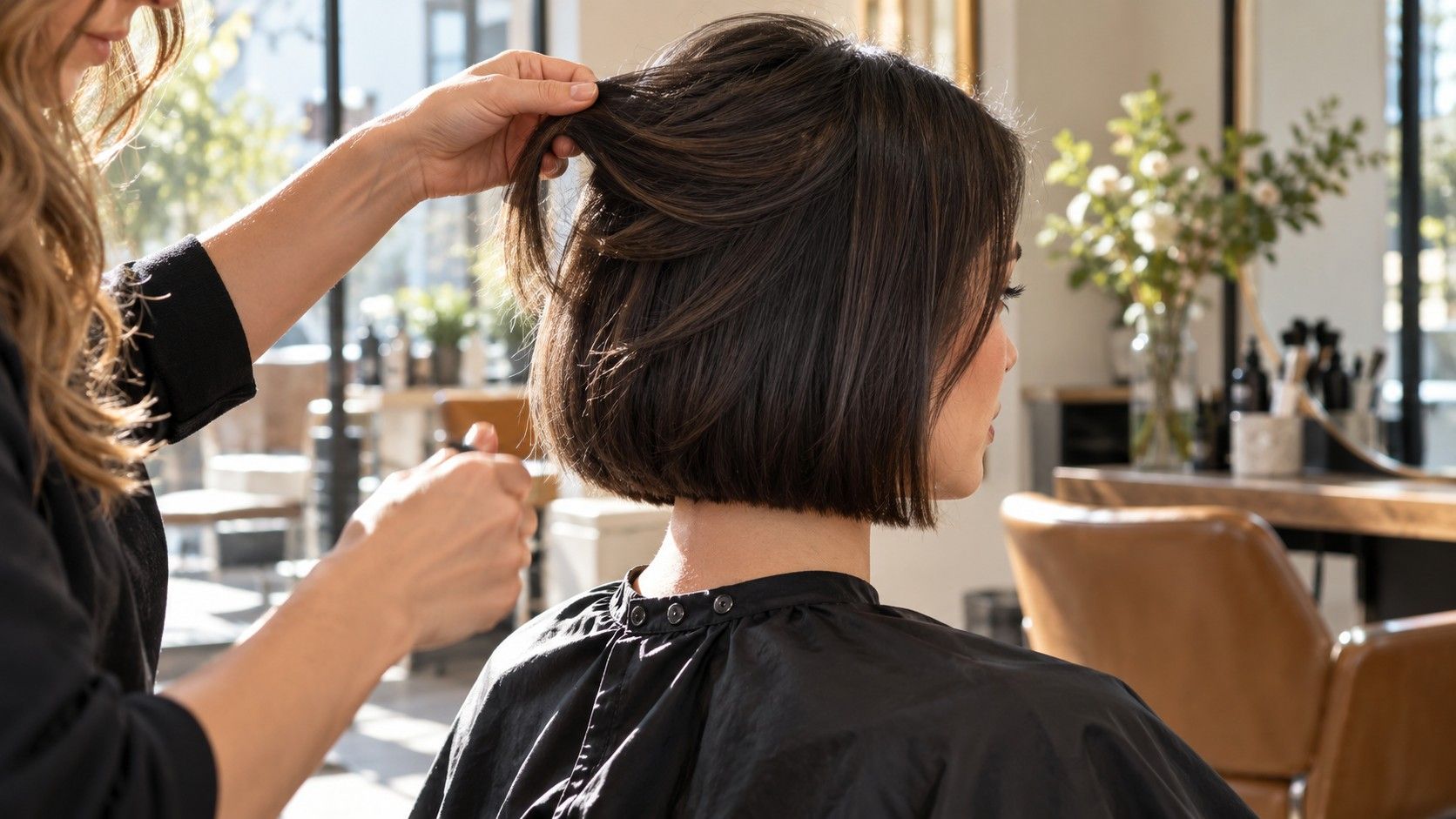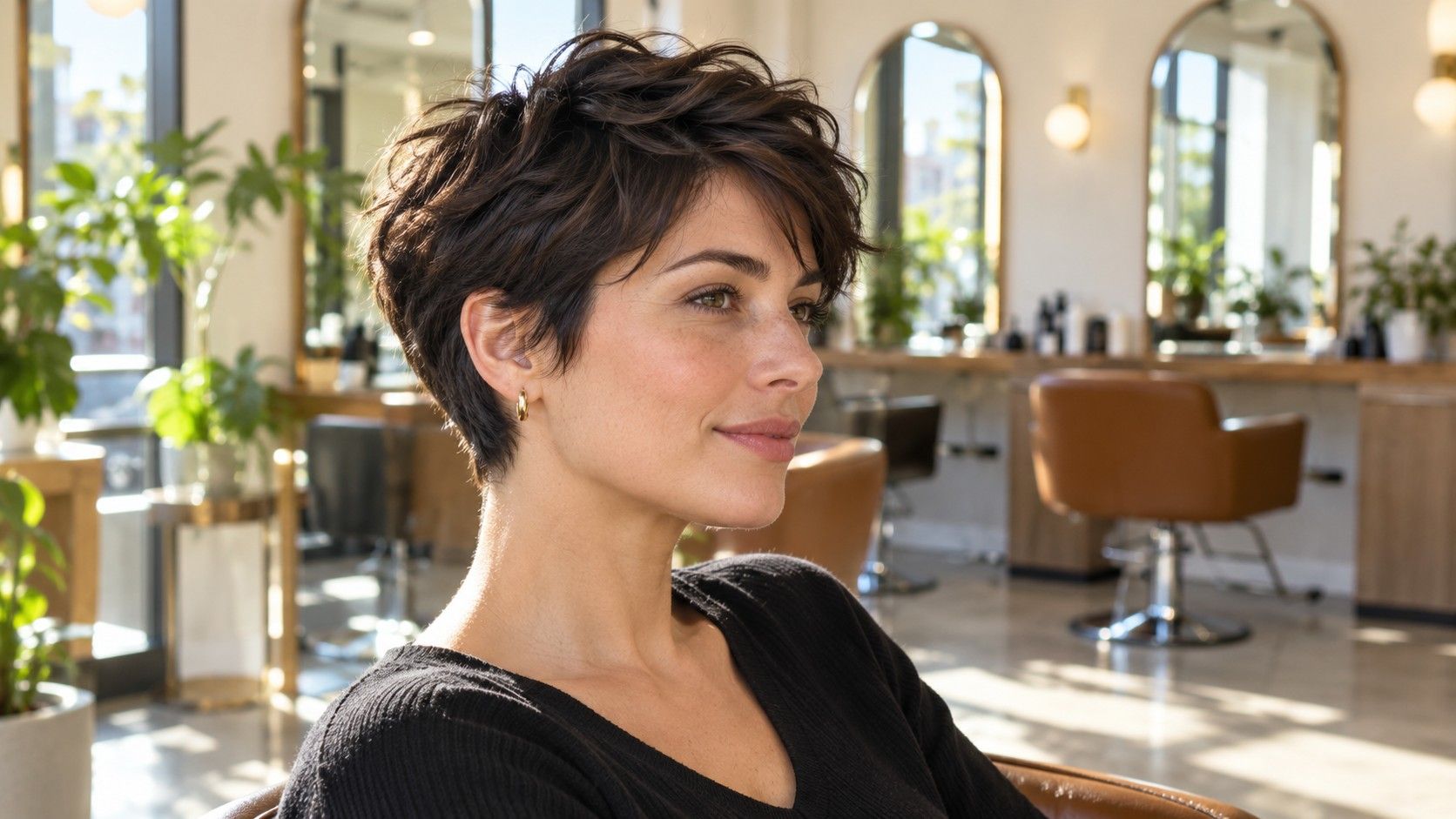
A pixie rarely grows into a bob with every section arriving together. The nape can start looking long while the front still refuses to tuck behind an ear; the crown may lose its original shape before the sides feel any longer. A useful grow-out plan deals with those mismatched lengths separately. The aim is to keep a shape you can wear while protecting the sections that need more time.
Decide which length you want to reach first
Choose the next wearable haircut rather than judging every stage against the long hair you eventually want. A longer pixie with a side-swept front, an ear-length crop and a short bob are different stopping points. Each needs a different balance between the top, sides and neckline. Save a photograph of the next shape you would be happy to wear, even if it is only a temporary destination.
Identify the shortest layer that prevents that shape. For a bob, it may be the section above the ear or a short crown layer that cannot yet meet the perimeter. For a swept-back crop, the front may need enough length to bend away from the face. Ask your stylist to show you the limiting section. This is the hair to protect when a general tidy-up starts sounding tempting.
Avoid fixing a deadline based on someone else's progress photographs. Starting lengths, hair texture and the amount removed at each appointment differ. Compare your own photographs taken from the same angles instead. A front view can miss changes at the back; include the nape and both sides so you can see whether the outline is moving toward your next goal.
Make the goal fit your everyday habits. If being able to tuck both sides behind the ears matters more than reaching a particular bob length, say so. If you dislike a long nape but enjoy an asymmetric front, a longer pixie may be a useful intermediate haircut. Growing out a pixie is easier to plan when success means a specific usable feature rather than simply more hair.
Keep the neckline intentional while the top catches up
Look at the profile before deciding what to trim. A narrow strip at the nape can appear longer than everything above it and create a tail you did not choose. Removing a little from that strip may make the whole haircut look more deliberate while leaving the top untouched. The important distinction is between cleaning the lower outline and shortening the hair needed for the next shape.
Explain exactly how much of the neckline you want to keep. “Clean it up” can mean anything from tidying stray hairs to restoring the close taper of the original pixie. If you want a bob, repeatedly returning to a high, close neckline may work against the lower shape you need. Ask to see the proposed line in a mirror before cutting and confirm which area is staying long.
Some people are happy to wear extra length at the back while the sides develop. Others prefer a compact outline even if that means keeping the nape shorter for a while. Neither choice is compulsory. Discuss the trade in relation to your reference photograph: will the next cut need that back length, or is it currently extending below a shape that is still much shorter at the sides?
Check how the neckline behaves after you sleep or wear a collar. A soft brush and your usual drying method may settle a bend that looks alarming straight out of bed. If the section continues to stand away from the neck and bothers you every day, take a photograph in its ordinary state. That gives the stylist a concrete problem to solve without returning the entire haircut to its original length.
Manage the weight around the ears
The area above and behind the ears can feel bulky before it becomes long enough to tuck. First check whether the issue is excess width, an uneven edge or a section sitting directly on top of the ear. Those problems can look similar in the mirror but call for different discussions. Removing length from all the sides may undo progress when only a small outline adjustment was needed.
Try the tuck gently before assuming the whole side is too short. You may have one longer piece that stays behind the ear and a shorter piece that escapes. A small clip can hold the loose section during work or exercise, while leaving the rest to grow. If a clip pulls or feels uncomfortable, move it; a grow-out style should not require keeping the hair under constant tension.
On dense hair, ask whether some internal weight can be adjusted while the outer length stays. Do not request heavy thinning as a default solution. The result depends on texture, density and the technique used, and shorter internal pieces may behave differently as they grow. Ask what the proposed change will do when you wear your natural finish, especially if you usually air-dry.
Watch the sideburn area too. A defined small edge can make an intermediate cut look purposeful, but cutting it very short may delay a soft connection into the front. If the eventual aim is an even bob, ask how that piece will join the perimeter. If you prefer a longer crop, a neater edge may be part of the shape you want to keep.
Use parting and texture before removing more length
A slightly different parting can redistribute weight while the original pixie shape grows out. Try moving it a little rather than forcing the hair to fall against a strong growth pattern. Compare the result after washing and again when the hair is dry. A change that looks good only while you hold it in place may demand more daily styling than you want.
For a front section that falls into the eyes, experiment with a soft sweep to the side, a loose twist held back or a small clip. These are ways to use the length you have without immediately cutting it into a new fringe. Let the shape remain a little asymmetrical if that feels comfortable. Trying to make both sides identical at every stage can lead to unnecessary shortening.
Texture can disguise uneven layers, but it should suit the hair you actually wear. A lightly separated finish may make a longer pixie feel more intentional; waves can change where short pieces sit around the temples. Begin with your ordinary routine and adjust one thing at a time. Buying several new products at once makes it harder to tell what is helping.
Check a proposed style on an ordinary morning, not only after an elaborate blow-dry. If the front needs careful setting every day to stay out of your eyes, decide whether that effort is acceptable for this stage. You can keep growing while choosing a less polished finish, or ask for a small front adjustment with a clear understanding of which length it removes.
Accessories also change the outline. A narrow band can hold short crown layers, but it may push the sides outward; a clip placed behind the temple may flatten one area and expose another. Look at the back as well as the front before leaving. The most useful option is one that feels comfortable and handles the specific loose pieces you have now.
Bring the next shape into your trim appointment
Arrive with three things: your next-shape reference, a recent photograph showing the problem area and a short explanation of what length you want protected. For example, “The nape looks too long, but I want the sides to reach my ears.” That is more precise than asking for a grow-out haircut and assuming both of you imagine the same destination.
Ask the stylist to separate essential reshaping from optional tidying. You may be able to leave a slightly uneven section if it is about to join the outline, while dealing with a neckline that is making the whole haircut feel untidy. A small imperfection can be a reasonable trade when you understand why it is being left. You can then decide whether it bothers you enough to remove.
Before cutting begins, agree on the sections that will be shortened and the sections that will stay. Ask to see how the proposed haircut connects to the next stage. A plan to preserve the crown while adjusting the lower edge is different from a fresh layered crop, even if both look neater immediately. The salon consultation should make that difference clear.
Set the next appointment around the shape's needs and your preferences rather than assuming every section needs trimming on the same schedule. If the haircut still sits well, you may have little to adjust; if one area becomes difficult, photograph it before the visit. Keep the reference current as your options change. Once the sides have enough length, the useful question may shift from managing a pixie to choosing the outline of your first short bob.