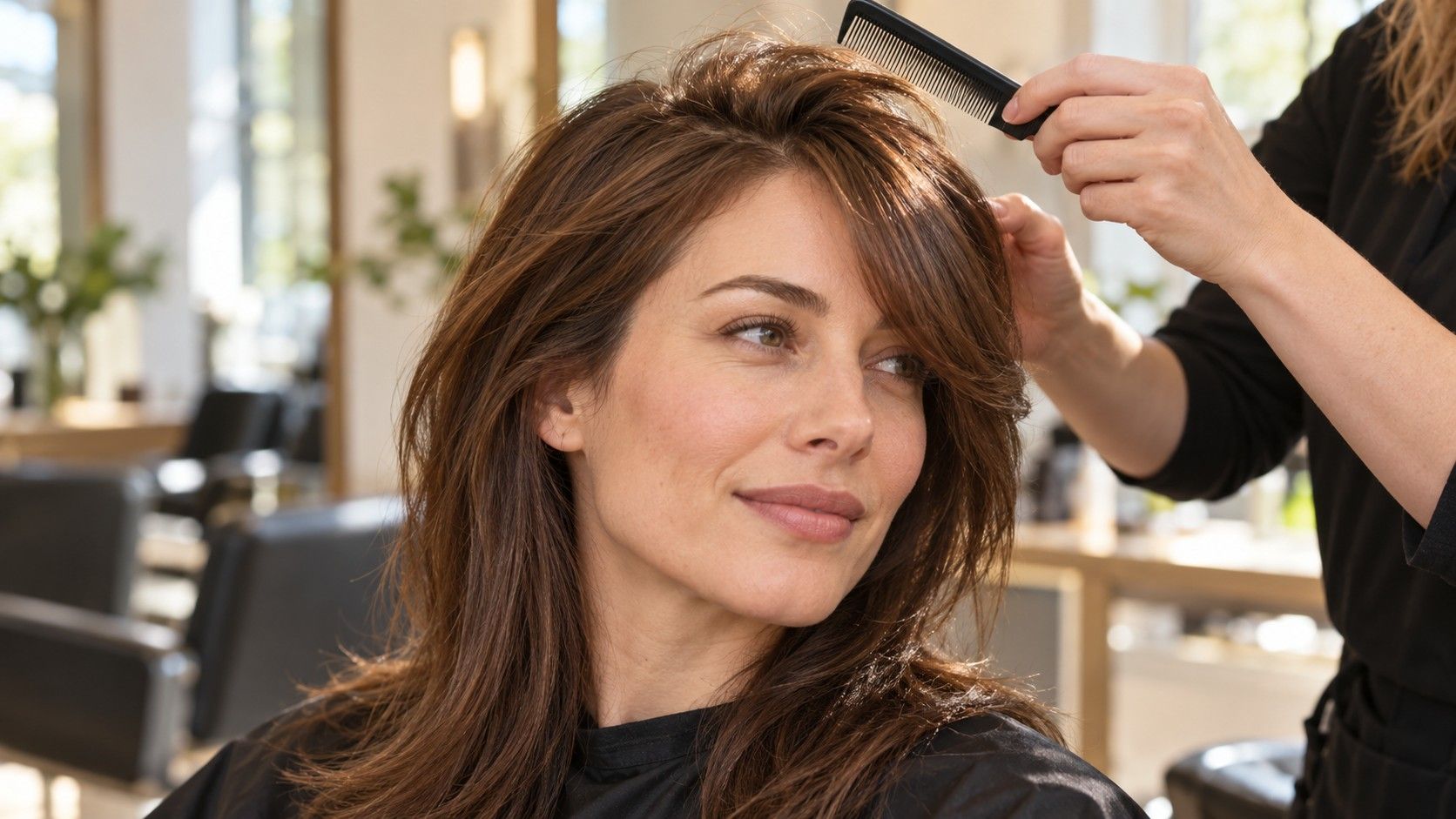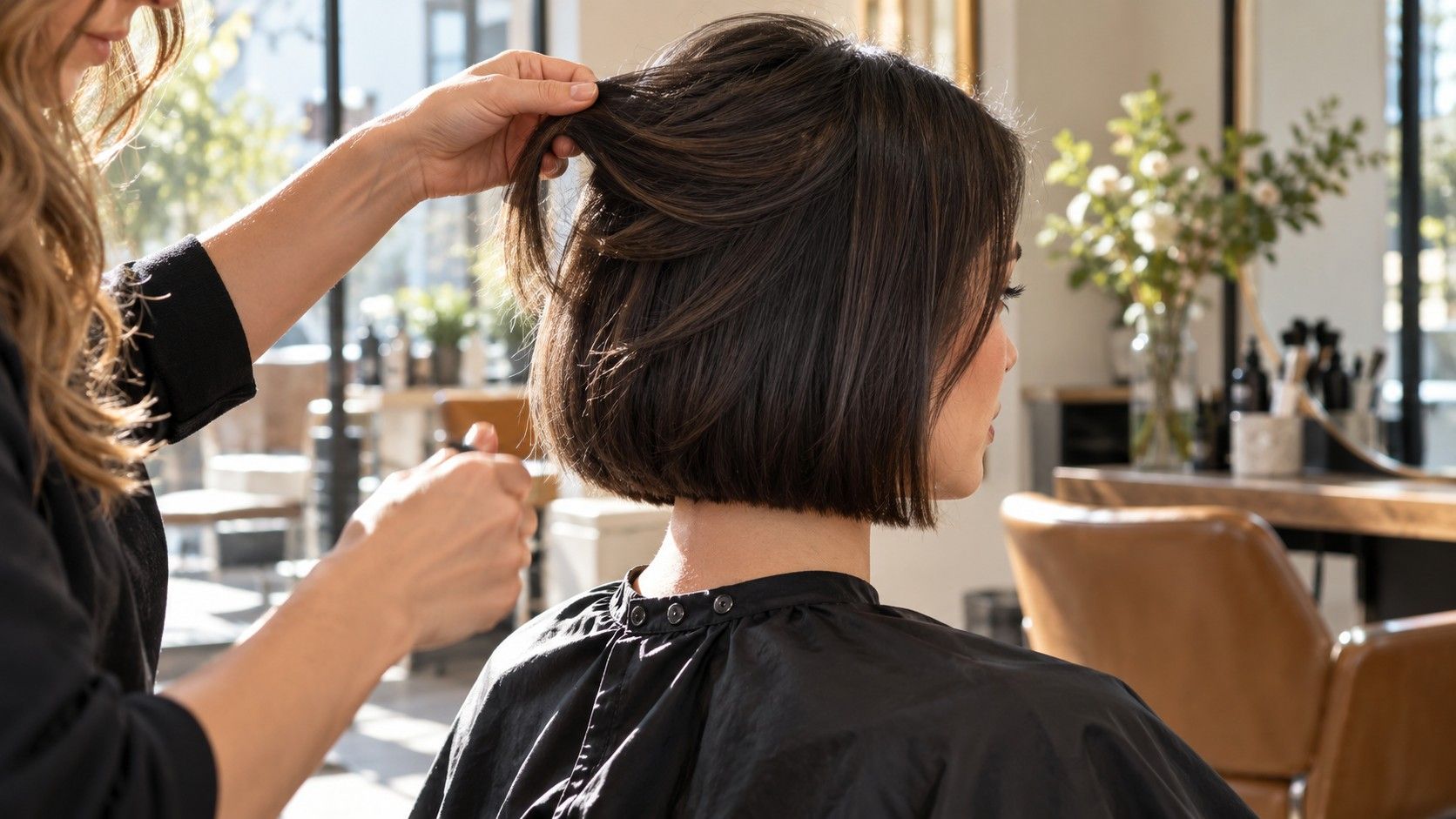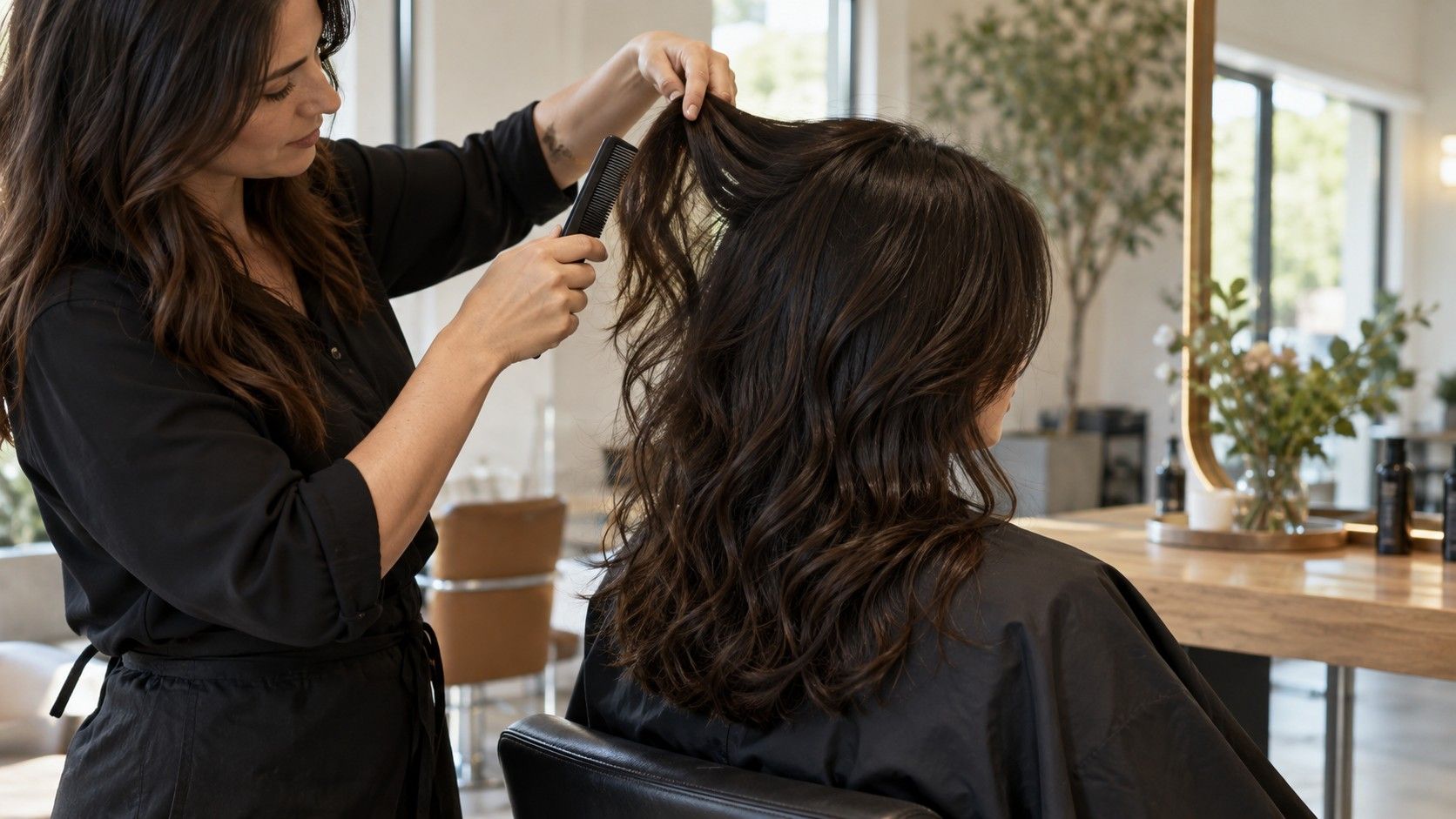
A haircut can feel heavy even when the length is right. The sides may push outward, the back may collect into a dense shelf, or the ponytail may feel larger than you want. Asking to thin it out does not tell a stylist which of those problems to solve. Before choosing among thick hair haircut ideas, decide where you want less weight and which parts of the shape you want to keep.
Point to the weight that actually bothers you
Look at your hair down, in your normal part, before lifting sections away from the head. Does the width gather beside the ears, below the cheekbones or at the bottom edge? Turn sideways and inspect the back as well. A triangular outline on a short cut is different from a long haircut that simply takes more effort to gather. The location determines what needs discussing, rather than the overall label of thick hair.
Use your hands to show the exact area. You might want the lower sides to sit closer while keeping a full bottom edge, or want a dense section behind the ears to feel less packed. Say which result matters: a narrower outline, easier movement, a smaller tie-back bundle or shorter drying work. One adjustment may not achieve all four, and removing hair from the wrong place can change a part of the haircut you already like.
Bring photos of the current cut from the front, side and back in its natural dry state. If the shape looks different after sleeping or air-drying, include that version too. A salon photo taken after a smooth blow-dry may hide where the hair usually expands. Explain your routine honestly, including how often you wear it tied back. The stylist needs to plan for your ordinary finish, not only the final polished photograph.
Separate density, strand thickness and surface texture
Density is the amount of hair on the head; strand thickness describes individual hairs. These do not always rise together. Fine strands can be densely packed, while thicker strands can form a lighter overall edge. A heavy ponytail tells you something about the bundle, but it does not determine which cutting method is best. Ask the stylist to assess the ends, interior and surface separately.
Frizz and flyaways are also different from bulk. Shortening more strands may change volume, yet leave more visible short ends on the surface. If the main concern is a fuzzy outline after drying, identify it before asking for extensive weight removal. The answer may involve a smaller adjustment to shape or a different finishing method rather than removing a large amount of hair. A cut cannot promise an identical finish in every weather condition.
Texture matters because weight can influence how bends and curls sit. Taking weight away may allow a section to rise or separate more. That may be the movement you want, or it may create width in the area you hoped to narrow. Bring the conversation back to the dry silhouette. Ask what the proposed change is likely to do at the crown, sides and bottom, rather than treating less hair as an automatic improvement.
Keep the perimeter you want to see
The perimeter is the outside edge of the haircut. A solid line can remain while some weight inside is adjusted, but it must be identified as a priority. If you like a blunt shoulder-length edge, point to it and say that you want to retain its density. A request for lighter hair can otherwise be interpreted as softer, more separated ends, which creates a visibly different finish.
Layers place shorter lengths within the cut. Long layers and short crown layers may both remove weight, yet they create different outlines. The shortest point is a useful reference: ask the stylist to show where it will finish when dry. If that point sits above the area you normally tie back, it may fall free of an elastic. If it sits near a natural wave bend, it may lift more than the same length in straight hair.
Consider the lower edge as well as the top. Removing a great deal from the ends can make them look thin while leaving the upper hair broad. That is a poor trade if your goal was less width with a substantial perimeter. Ask how the layers will connect and where the weight will remain. You do not need the technical cutting vocabulary to specify a fuller edge, a calmer side profile or a crown that does not become noticeably shorter.
Discuss internal removal before agreeing to thin the ends
Internal weight removal changes selected areas beneath or within the visible surface. It is worth discussing when you want the haircut to feel lighter without a large change in the outside line. Ask which sections would be adjusted and how short the internal pieces would become. The technique should serve a particular shape; it should not be a broad response to every head of dense hair.
Scissors, razors and texturizing shears can all be used in different ways. Their names alone do not predict the result, so avoid choosing or rejecting a method only by the tool. Ask the stylist to explain what it will change in your dry hair. If a previous cut left a wispy perimeter, short pieces standing up or a visible step, describe that result and show a photograph. That evidence is more useful than an unclear instruction to use fewer layers.
A large undercut removes a separate section very short, creating a different commitment from subtle interior work. It may show when the hair is tied up, and its regrowth can need a plan. Do not assume it is hidden in every hairstyle. If it is proposed, ask to see the boundary on your head and discuss how it will look with your usual ponytail or part. Choose it because you want that arrangement, rather than because it is presented as the only route to lighter hair.
Work in stages if you are unsure about the amount. Once the main cut is dry, the stylist can assess whether more refinement is useful. Removing additional weight before seeing how the hair settles can make it harder to distinguish a good shape from a temporary styling effect. A slightly conservative first change leaves more options for a later adjustment.
Let waves, curls and the shoulders have a say
A wave that lands on a shoulder can flip outward; one cut above the shoulder may bend in a different place. Shortening to remove weight can therefore change the width as well as the length. Hold the hair near the proposed line and discuss where the dry ends might land. This does not recreate a finished haircut, but it makes the landing point part of the decision.
With curls, ask for an assessment of the dry pattern and how much each area rises. The front, crown and nape may not contract equally. There is no universal number of centimeters that can be removed while preserving the same outline. Layers can distribute the shape, but shorter sections may spring higher and alter where volume sits. Identify the desired dry length and widest point before the cut begins.
For an air-dried routine, request a look at the texture before it is fully smoothed or curled with tools. A polished finish is useful, but it can disguise disconnected sections that appear when the natural pattern returns. If you often switch between straight and natural finishes, explain which one should guide the haircut. A compromise may involve retaining more length or weight than a single inspiration photo suggests.
Check movement and tie-back before the last adjustment
Once the haircut is dry, restore your usual part and let the hair fall without arranging every section. Turn your head, tuck one side behind an ear and release it. Look at the ends against a plain cape or shirt. Check that the shape still has the perimeter you wanted and that the shorter sections sit where expected. Ask to see the back in a mirror rather than judging only the face-framing pieces.
If you use a ponytail, gather it yourself at the usual height. Check the nape and temples for pieces that escape, and note whether a clip would be acceptable. A lighter bundle may feel different, but that is separate from whether it remains contained. For a bob or another short cut, check how the hair sits around glasses and behind the ears. These movements often reveal a practical issue that a still front view misses.
Ask what change to expect as the shorter sections grow and what the next appointment would maintain. Keep a photo of the dry result from several angles so you can explain whether the weight was removed from the right place. If you later want more taken out, describe the remaining area precisely. A clear location and a preserved outline give the next adjustment a better starting point than another general request to thin everything.